


How Dangerous Are Seizures and When to Seek Help

Updated: May 23
Living with epilepsy as a young adult means juggling careers, relationships, and the occasional unpredictability of a seizure. It is completely normal to feel anxious about navigating life with a seizure disorder. However, taking back your power starts with education. By deeply understanding the real risks associated with seizures and knowing exactly when a situation shifts from routine recovery to a medical emergency, you can navigate your epilepsy with confidence. Let's explore the medical realities and safety protocols.
The Real Risks of Seizures

Many seizures are temporary electrical disruptions that the brain naturally recovers from without intervention. However, there are tangible physical and neurological risks that require elevated awareness. The most common danger is physical injury. Sudden falls, intense muscle contractions, or losing spatial awareness can easily lead to severe bruises, concussions, or broken bones. Thermal injuries are also a significant risk if you happen to be cooking or near a heat source when a seizure strikes.
Beyond immediate physical injuries, aquatic environments pose a severe threat. Experiencing a seizure while swimming or taking a bath carries an incredibly high risk of drowning. This is exactly why showers are universally recommended by neurologists for young adults living with active epilepsy.
There are also severe internal medical risks to consider, such as Status Epilepticus. This critical condition occurs when a seizure lasts longer than five minutes or when multiple seizures happen consecutively without full neurological recovery between them. During Status Epilepticus, the brain is deprived of oxygen, and immediate medical intervention is required to prevent permanent neurological damage or cognitive decline.
Finally, while it is a heavy topic to discuss, SUDEP (Sudden Unexpected Death in Epilepsy) is a profound risk, particularly for those with uncontrolled generalized tonic clonic seizures. The exact physiological mechanisms are still being researched by medical professionals, but it is heavily believed to involve severe respiratory or cardiac dysfunction immediately following a seizure event. The most effective way to protect yourself is to take your antiseizure medications consistently and work closely with your neurology team to minimize your overall seizure frequency.
Immediate First Aid and Safety Steps

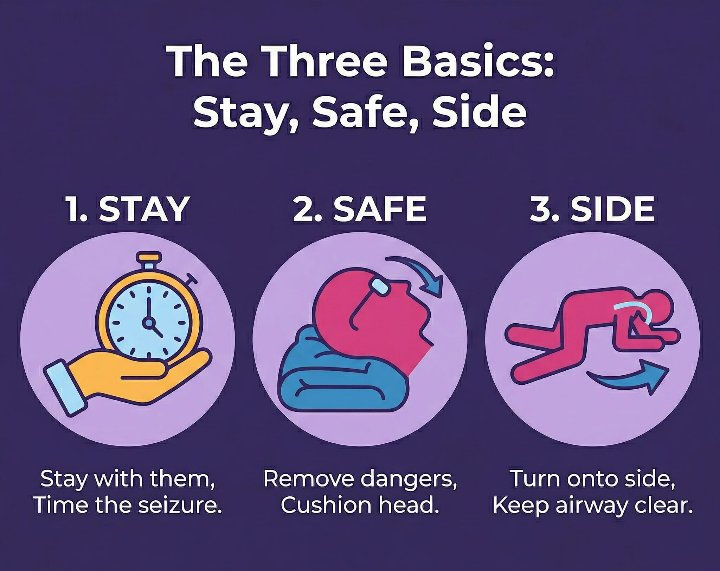
When a seizure does not meet the criteria for a medical emergency, the immediate priority shifts to basic first aid. Instead of calling an ambulance, your support network should focus on safety and comfort.
They should gently guide you to a safe location and carefully cushion your head with a pillow or a rolled jacket to prevent impact injuries. Next, they must gently turn you onto your side. This specific posture is crucial because it helps keep your airway clear of saliva or other fluids while your body recovers.
It is vital that your support system stays right by your side until the episode has completely passed and you are fully awake and oriented. The postictal recovery period can be disorienting, and having a calm, familiar presence makes a significant difference.
Once you have fully recovered from the physical exhaustion and confusion, the final step is administrative. Simply log the event in your digital seizure tracker and send a detailed message to your neurologist. Keeping your medical records thoroughly updated ensures your healthcare team has the accurate data they need to adjust your treatment plan if necessary.
When to Seek Immediate Help and Recognize Medical Emergencies
Not every seizure requires a frantic call for an ambulance, but your friends, family, and colleagues need to know exactly when a seizure crosses into emergency territory.

Immediate emergency medical help is absolutely required if a seizure lasts longer than five minutes. Because time can feel like it stands still during a medical crisis, having a bystander physically look at a watch or phone timer is critical for accurate assessment. You should also dial your local emergency number if another seizure starts soon after the first one ends, or if you do not regain consciousness and normal breathing after the convulsing completely stops. Breathing difficulties or turning blue are major red flags that require immediate paramedic support.
Additionally, emergency medical care is necessary if the seizure occurs in water, if you sustain a significant physical trauma like a severe head impact, or if you have a secondary medical condition such as diabetes or a cardiac history. If someone in your social circle experiences their first ever seizure and has no documented history of epilepsy, that is also an automatic medical emergency requiring a hospital visit for brain imaging and evaluation.
When Routine Care and Subsequent Monitoring is Appropriate

If you have an established epilepsy diagnosis, you and your healthcare team likely have a detailed seizure action plan in place. In many scenarios, a breakthrough seizure can be managed safely at home or work without an expensive and stressful trip to the emergency room.
A seizure is generally not a medical emergency if it aligns with your typical presentation, lasts less than five minutes, and you steadily return to your normal baseline conscious state afterward.
Even if you feel incredibly tired, confused, or experience a throbbing headache, this is entirely normal during the postictal recovery phase. The postictal state is the brain actively repairing and resetting its electrical pathways, and it can last anywhere from a few minutes to several hours depending on the severity of the episode. Routine home care is usually sufficient during this time, provided you have not sustained any injuries requiring stitches or serious medical attention.
Instead of calling an ambulance, your support network should focus on safety and comfort. They should gently guide you to a safe location, cushion your head with a pillow or rolled jacket, gently turn you onto your side to keep your airway clear of fluids, and stay by your side until you are fully awake and oriented. Once you have fully recovered, simply log the event in your digital seizure tracker and send a message to your neurologist to keep your medical records thoroughly updated.
Empowering Yourself and Your Community
Living with epilepsy does not mean you cannot live a fiercely independent and fulfilling life. By understanding the true neurological risks and clearly communicating your emergency response plan to your roommates and colleagues, you take the guesswork out of your health management. Education builds safety, and you are your own best advocate.
Sources

Comments