


Guide to Seizure First Aid

One of the hardest parts of living with epilepsy is not always the seizure itself. Sometimes it is the fear of having one in front of other people.
It can sit quietly in the background of everyday life. In class. At work. On a date. Out with friends. You may know what your seizures feel like, what your recovery is usually like, and what helps you most afterward. But the bigger question can still linger: Will the people around me know what to do?
That fear is real. It is also one of the reasons seizure first aid matters so much.
The good news is that helping someone during a seizure does not require medical training. Most of the time, what matters most is staying calm, keeping the person safe, and knowing when emergency help is actually needed. Public health guidance from the CDC and Epilepsy Foundation emphasizes practical safety steps rather than panic or dramatic intervention.
Whether you are living with epilepsy and want a guide to share with friends, or you simply want to be prepared for someone you care about, here is a clear, medically grounded guide to seizure first aid.
Disclaimer: This article is for educational purposes only and is not a substitute for advice from your doctor or epilepsy care team. In an emergency, call 911 or your local emergency number.
The Three Basics: Stay, Safe, Side
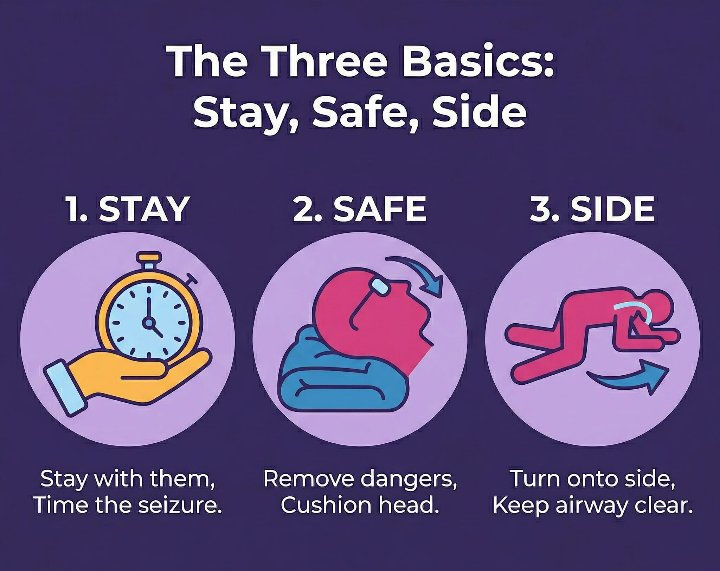
For many people, the seizure that comes to mind first is a convulsive seizure, sometimes called a generalized tonic-clonic seizure. These seizures may involve loss of awareness, falling, body stiffening, and rhythmic shaking. If you see one happening, focus on three basics: Stay. Safe. Side.
1. Stay with them
Stay with the person from the beginning of the seizure until they are awake and alert afterward. Start timing the seizure right away using your phone or a watch. Timing matters because the length of the seizure helps determine whether emergency care may be needed. If they wear a medical ID bracelet or necklace, check it for useful information.
2. Keep them safe
Move nearby objects that could cause injury. If possible, place something soft under their head, such as a folded jacket or small pillow. Loosen tight clothing around the neck. If they are wearing glasses, remove them if you can do so safely. The goal is not to stop the seizure. The goal is to reduce the risk of injury while it runs its course.
3. Turn them on their side
If the person is on the ground, gently turn them onto their side when you can. This helps keep the airway clear and allows saliva or fluid to drain more easily. If you cannot safely move them during active convulsing, wait until the jerking eases and then roll them onto their side.
Not All Seizures Look the Same

Not all seizures involve falling or full-body shaking. Some seizures are much less obvious. A person may stare, stop responding, make repetitive movements, wander, or seem confused and “not fully there.” In these cases, the best response is usually calm supervision and protection from hazards. The CDC notes that seizures can look different depending on how they affect the brain and body.
If someone is having this kind of seizure:
Stay with them and keep track of time.
Gently guide them away from danger, such as traffic, stairs, hot surfaces, or water.
Speak calmly and give them space.
Do not grab them aggressively unless there is an immediate safety risk.
Stay until they are fully aware again.
Some people are confused, embarrassed, or exhausted after a seizure. A calm presence can make a major difference.
What Not to Do

There are still a lot of myths about seizures, and some of them can cause real harm.
Do not put anything in their mouth
A person having a seizure cannot swallow their tongue. Putting an object in their mouth can break teeth, injure the jaw, cut the gums, or block the airway. This is one of the most important seizure first-aid facts for bystanders to know.
Do not hold them down
You cannot stop a seizure by restraining someone. Holding them down can increase the risk of injury for both the person having the seizure and the person trying to help. Protect them from nearby hazards instead.
Do not panic if they do not respond right away
It is common for someone to be tired, confused, or slow to respond after a seizure. That recovery period can take time. Stay with them and speak calmly.
When to Call 911

Not every seizure requires an ambulance. Many seizures stop on their own within a couple of minutes, especially in people who already have a known seizure disorder. But there are situations where emergency medical care is necessary. The CDC, NHS, and epilepsy organizations consistently advise calling emergency services if any of the following apply:
The seizure lasts more than 5 minutes.
Another seizure starts before the person fully recovers.
The person has trouble breathing after the seizure.
The seizure happens in water.
The person is seriously injured.
It is the first seizure you know of.
The person does not return to their usual level of alertness as expected.
If the person has an individualized seizure action plan or prescribed rescue medication, follow that plan when you are able to do so safely. The Epilepsy Foundation notes that a medical ID may include emergency instructions or indicate that rescue medication has been prescribed.
What to Do After the Seizure

The time after a seizure can be just as important as the seizure itself.
A person may feel drained, confused, emotional, embarrassed, or have a headache. They may need a few minutes or much longer to fully recover. Stay with them until they are awake, safe, and able to respond appropriately. Reassure them with simple, calm language. Let them know what happened. If they want support contacting a friend, family member, roommate, or partner, help them do that.
A calm response matters. For many people with epilepsy, the emotional aftermath of a public seizure can feel just as difficult as the physical recovery. Respect, patience, and steady reassurance go a long way.
Why This Matters
Seizure first aid is not just medical information. It is community care.
When friends, roommates, partners, coworkers, and classmates know what to do, the situation becomes safer and less frightening for everyone involved. It reduces panic. It reduces injury risk. And it helps people with epilepsy feel less alone in everyday life. The practical steps are simple, but the impact can be enormous.
Being prepared is one of the clearest ways to show up for someone. You do not need to do everything. You just need to do the right things.


Comments